How to cook duck magret (in 20 minutes)
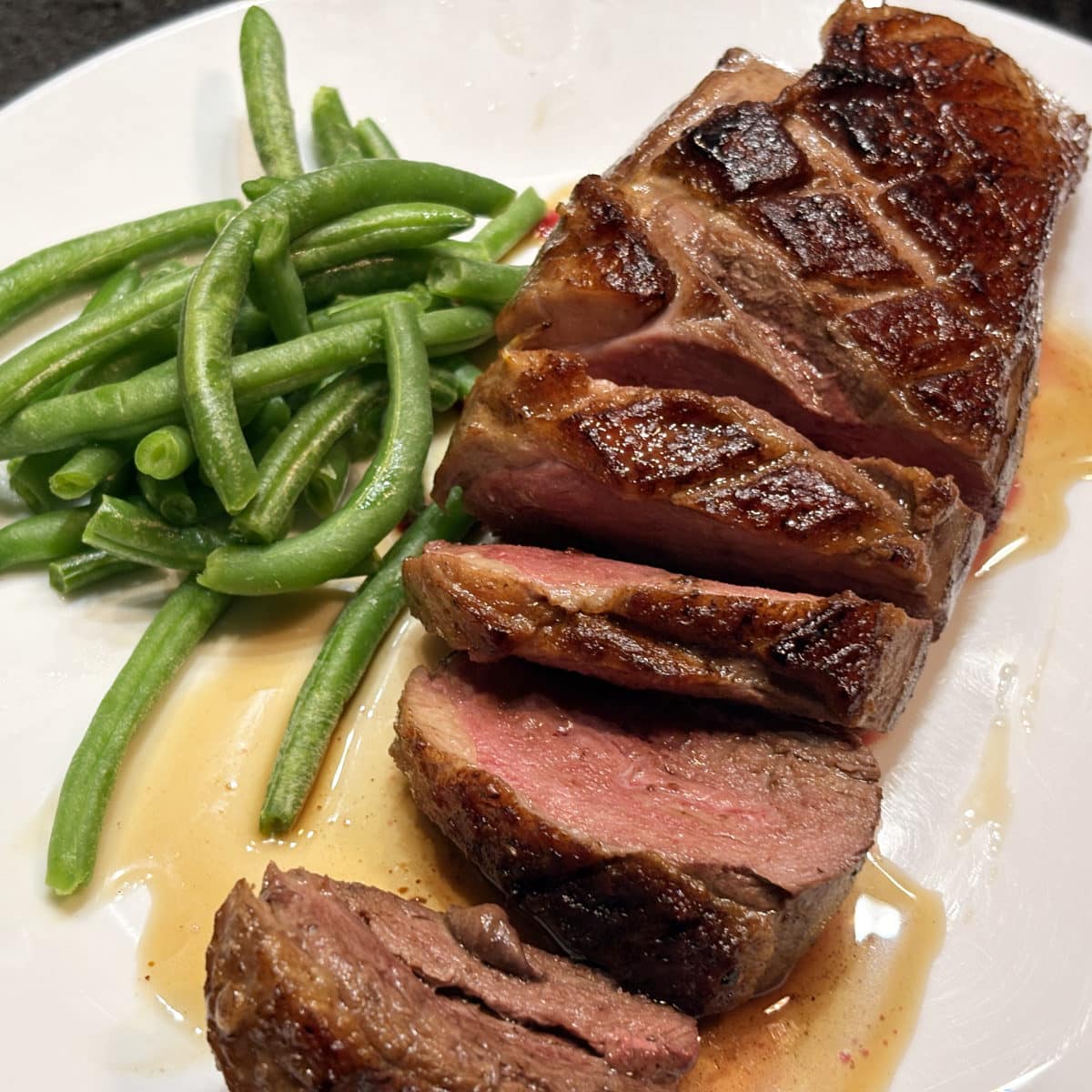
Learn how to cook duck magret the French way, with crispy scored skin and tender meat that is 5-star delicious.
Ingredients
 | 1 duck breast, around 350 g (0.75 lb) |
 | 2 tablespoons of Balsamic vinegar (optional) |
 | 1/2 teaspoon of coarse sea salt |
 | 1/2 teaspoon of fresh ground pepper |
How to cook duck magret
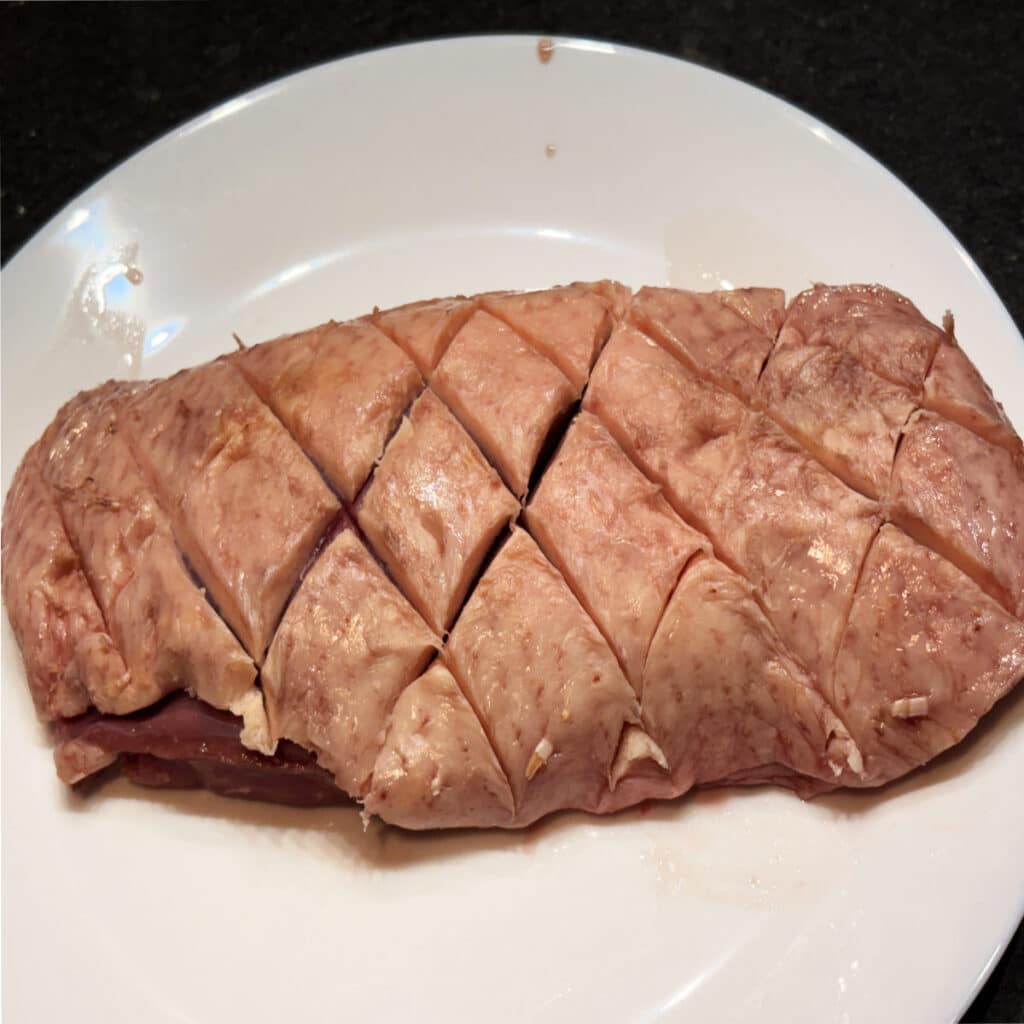
- Score the duck fat in a criss-cross pattern with a sharp knife, taking care not to cut into the meat.
- Sprinkle half of the salt into a cold pan.
- Place the magret duck breast skin-side down in the cold pan without adding oil.
- Cook over medium heat for 6-8 minutes until the skin is deep golden and crispy.
- Pour off excess duck fat into a bowl as it renders, reserving it for the sauce.
- Season the meat side with salt and pepper, then flip and cook for another 2-3 minutes.
- Reduce the heat to low and add optional balsamic vinegar.
- Cover with a lid or foil and cook for another 4 minutes.
- Rest the duck for 5 minutes after removing it from the pan.
- Combine the remaining pan juices and balsamic vinegar with the reserved duck fat to create a sauce.
- Slice the magret against the grain and serve warm.
Duck magret is one of those dishes that sounds like it is at a “French Michelin restaurant level” of intimidating. But actually, it is one of the simplest of recipes, with just a dash of salt, pepper and optional balsamic vinegar.
No complicated marinade, you just need a juicy piece of duck breast, that cooks in its own fats. Yup, there are no added oils either.
Start by scoring the skin in a crosshatch pattern, being careful not to cut into the meat. This allows the thick layer of fat to render properly and turn crisp instead of rubbery. Then place the magret skin-side down in a cold pan.


As the pan slowly heats, the fat renders out gradually, creating its own cooking medium. Pour off excess fat as it accumulates and save it to serve as a sauce.
Cook mostly on the skin side over medium heat until it’s deeply golden and crisp, and then flip and cook the flesh side. Duck breast is best pink in the center so watch your timing to get that tender buttery texture.
Let it rest for at least 5–10 minutes before slicing so that the juices remain in the meat, and not on your cutting board. Slice thinly against the grain and serve immediately.
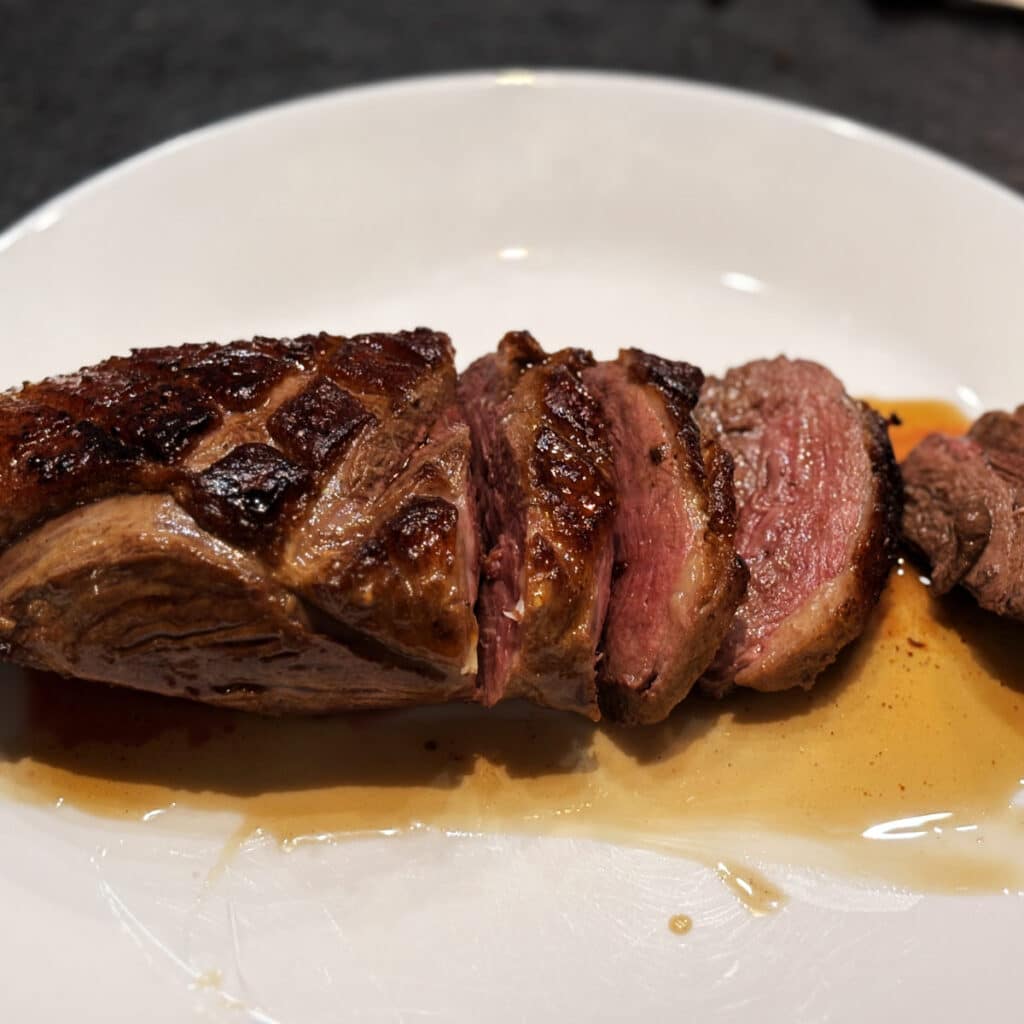

Duck magret
Equipment
Ingredients
- 1 duck breast (350 g or 0.75 lb)
- 2 tablespoons of balsamic vinegar (optional)
- 1/2 teaspoon course salt
- 1/2 teaspoon ground pepper
Instructions
- With a sharp knife, score the fat in a criss-cross pattern. Be sure to not cut into the meat. This helps the fat melt instead of turning chewy.
- Sprinkle half of the salt on a cold pan.
- Place the magret fat side (skin-side) down in the cold pan which has a bit of the salt on the bottom. Do not add any oil, as the duck will cook in its own grease.
- Heat the pan on medium and let it cook 6–8 minutes until the skin is deep golden and crispy. Pour off excess fat into a bowl as it renders, and save it to use as a sauce.
- Season the meat with salt and pepper and flip the magret, cooking for an additional 2-3 minutes.
- Reduce the heat down to low, and (optional) add in the balsamic vinegar. Cover the dish with a lid or aluminium foil and let cook for an additional 4 minutes.
- Remove from pan and let the meat rest 5 minutes.
- Pour out the remaining balsamic vinegar and oils into the bowl (where fats were reserved earlier) and mix together to serve as a sauce.
- Slice the magret against the grain and serve while warm.
Nutrition
Please note: We are not certified nutritionists and these estimates written and produced for entertainment purposes only.
What to serve with it?
Magret de canard goes well with simple sides like sautéed or roasted potatoes, or mushroom and potato gratin.
For vegetables, think green beans, endives, or asparagus.
A lightly sweet element such as this apple salad works especially well, with duck finished with balsamic vinegar.

How to store it?
Cooked magret should be cooled, stored in airtight glass container, and kept in the fridge for up to three days. It’s best enjoyed cold or gently reheated in a pan over low heat.